
Fort Pierce Mold Remediation
Occupants worry about airborne spore exposure and health risks when visible black mold colonies rapidly expand across damp drywall and baseboards. Our certified specialists deploy containment barriers and industrial air scrubbers to eliminate microbial growth at the root. We restore clean, breathable indoor air while protecting structural framing.
Once the water is off, call (772) 555-0174.
Certified Abatement Specialists
The coastal municipality encompasses 22,262 housing units on record in the Census ACS 5-year estimates.
About 72% of housing units in the local area (16,041 of 22,262) were built before 1980, the period when asbestos-containing materials and lead paint were still in use.
The median owner-occupied home locally was built in 1980 (Census ACS 5-year), meaning aging wall assemblies require specialized care during microbial abatement.
Year-round coastal humidity and ambient temperatures allow microbial spores to germinate on damp gypsum drywall and baseboards in as few as 24 to 48 hours following a leak.
As homeowners often describe in post-storm discussions, residents require immediate guidance on tear-out procedures for waterlogged baseboards, drywall, and flooring to prevent rapid mold outbreaks following hurricane flooding.
To protect your property after moisture intrusion, you can schedule comprehensive water damage restoration services with our remediation team.
Systematic Containment & Removal
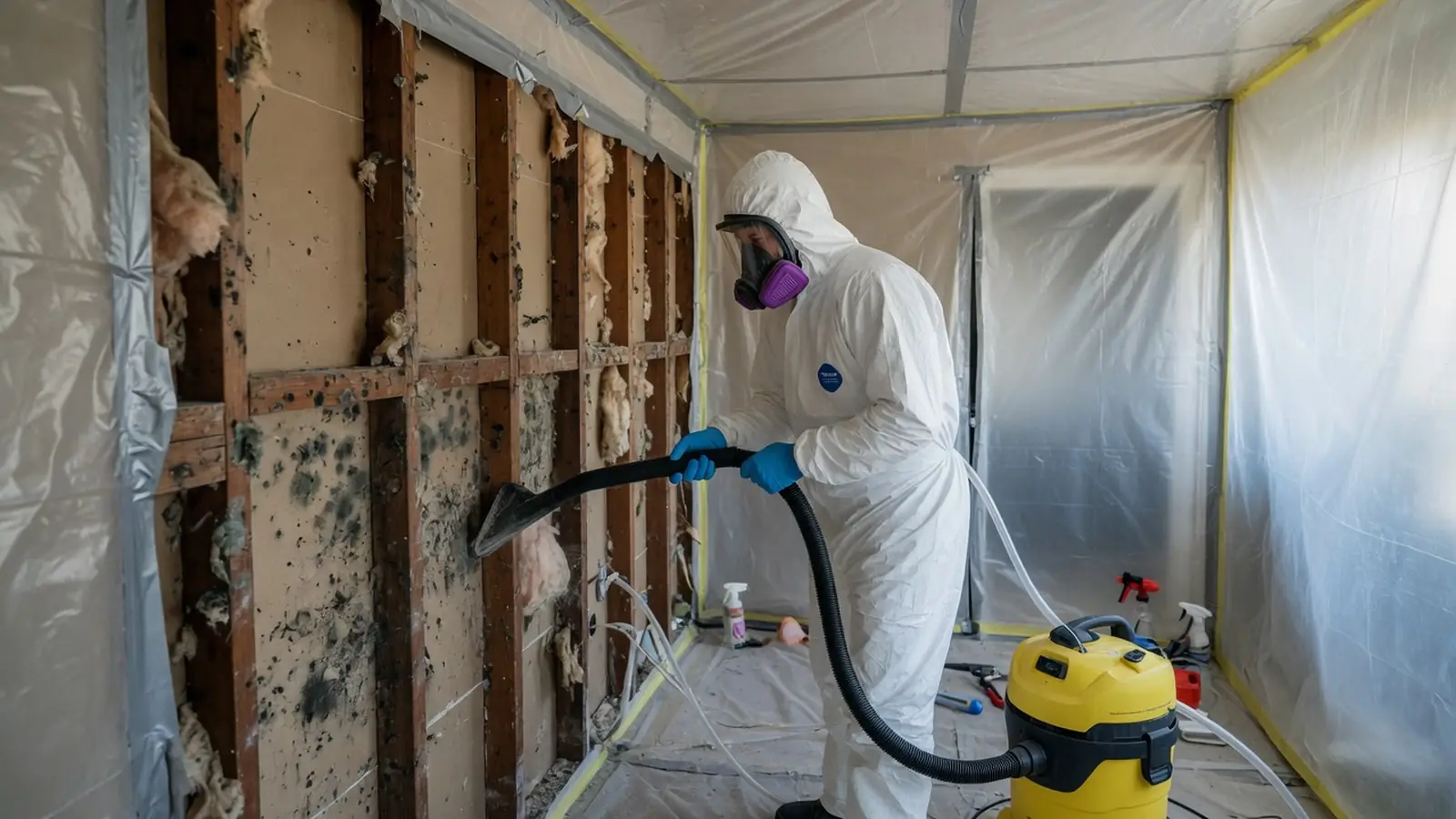
Proper mold remediation requires physical polyethylene containment and negative air pressure with HEPA filtration before removing colonized drywall to prevent cross-contaminating clean living areas.
- Inspection & Moisture Mapping. Detecting hidden water trapped behind drywall and flooring requires thermal imaging and moisture meters to stop mold formation. As experienced specialists frequently note in diagnostic field videos, locating trapped moisture behind baseboards is critical before any remediation starts.
- Containment & Negative Air. Property owners are uncertain how to treat surface mold and rusted fasteners on framing studs, or when moisture levels are safe for drywall reinstallation. Our technicians erect airtight poly barriers and run negative air filtration to trap microscopic particles securely.
- Controlled Demolition & Treatment. We safely bag and extract contaminated drywall and baseboards before treating exposed wood framing with hospital-grade antimicrobial solutions. When severe squalls compromise rooflines or siding, homeowners can turn to our storm damage mitigation specialists for immediate structural dryout.
- HEPA Vacuuming & Clearance. Our crew performs meticulous HEPA vacuuming across all structural cavities and runs industrial dehumidifiers until framing reaches safe moisture equilibrium.
Rigorous Containment Standards
A pattern echoed in public discussions is that property owners need complete assurance that microscopic contaminants are fully contained during teardown. Following severe ocean squalls, coastal residents dealing with saturated building materials can request emergency hurricane surge cleanup to halt secondary fungal spread immediately. We follow strict remediation guidelines, maintaining airtight seals and high-efficiency particulate air filtration from initial inspection through final clearance.
Airborne Spore & Containment Control
We isolate contaminated areas using heavy plastic barriers and negative air filtration systems equipped with HEPA filters. This prevents airborne microbial spores from drifting into clean living spaces during demolition.
Colonized Drywall & Material Removal
Water-damaged gypsum wallboard and saturated baseboards cannot be salvaged once colonized by active fungi. Our crew carefully strips away compromised materials under negative pressure to eliminate contamination.
Structural Stud Treatment & Drying
Exposed wood framing is scrubbed clean, treated with EPA-registered antimicrobial wash, and dried using commercial dehumidifiers. We verify moisture levels reach safe thresholds before any rebuilding begins.
Our Commitment To Mold Remediation Standards
We approach every microbial contamination project with strict engineering controls, verified containment barriers, and thorough structural drying to ensure safe indoor living spaces.
- 10Zip Codes Served
- 5Service Areas
- 3Services Offered
Here is what local property owners share about our containment standards, upfront pricing, and thorough job cleanup.
“I already gave their contact information to my next-door neighbor after seeing how thoroughly they isolated the master bathroom mold. The crew sealed every vent, ran negative air scrubbers for three days, and left our air feeling fresh again. You will not find a more dependable group of specialists for indoor air quality concerns.”
Marcus B.
“Another handyman had simply sprayed bleach over our waterlogged baseboards and tacked fresh drywall right over colonized studs, causing black spots to bleed through within weeks. This company stripped away the compromised materials, disinfected every rusted fastener, and properly certified the framing before closing the wall. They completely fixed the mess the first contractor left behind.”
Elena R.
“Their detailed written estimate matched our final invoice down to the penny with zero surprise add-ons. The crew explained the containment costs, equipment run-times, and stud treatments clearly before setting up a single piece of gear. Having that total financial clarity made an extremely stressful leak much easier to handle.”
David K.
“Every evening before packing up their trucks, the technicians vacuumed the hallways and double-checked the plastic containment zippers. We never had to navigate stray construction debris or dusty footprints while living through the remediation process. The team treated our home with tremendous respect from start to finish.”
Patricia M.
Frequently Asked Questions
Will turning on the central air conditioning dry out damp drywall after a leak, or will it pull hidden mold spores into the ductwork and spread them through the home?
Running your central air conditioner will not dry saturated drywall and pulls airborne mold spores into ductwork, spreading colonies to other rooms.
How do technicians treat surface mold and rusted fasteners on framing studs after water damage?
Technicians treat framing by wire-brushing surface mold, replacing rusted fasteners, and applying EPA-registered fungicidal coatings to bare studs.
How quickly does mold germinate and colonize drywall following an indoor water leak?
Microbial spores germinate on damp gypsum drywall and baseboards in as few as 24 to 48 hours under warm, humid coastal climate conditions.
Why do pre-1980 residential structures require special containment protocols during mold removal?
Older homes require containment because tearing out colonized walls risks disturbing hazardous materials like asbestos insulation or lead paint.
How does negative air pressure containment protect clean areas during remediation?
Negative pressure containment pulls air through HEPA filtration units, preventing airborne fungal spores from escaping into clean living spaces.